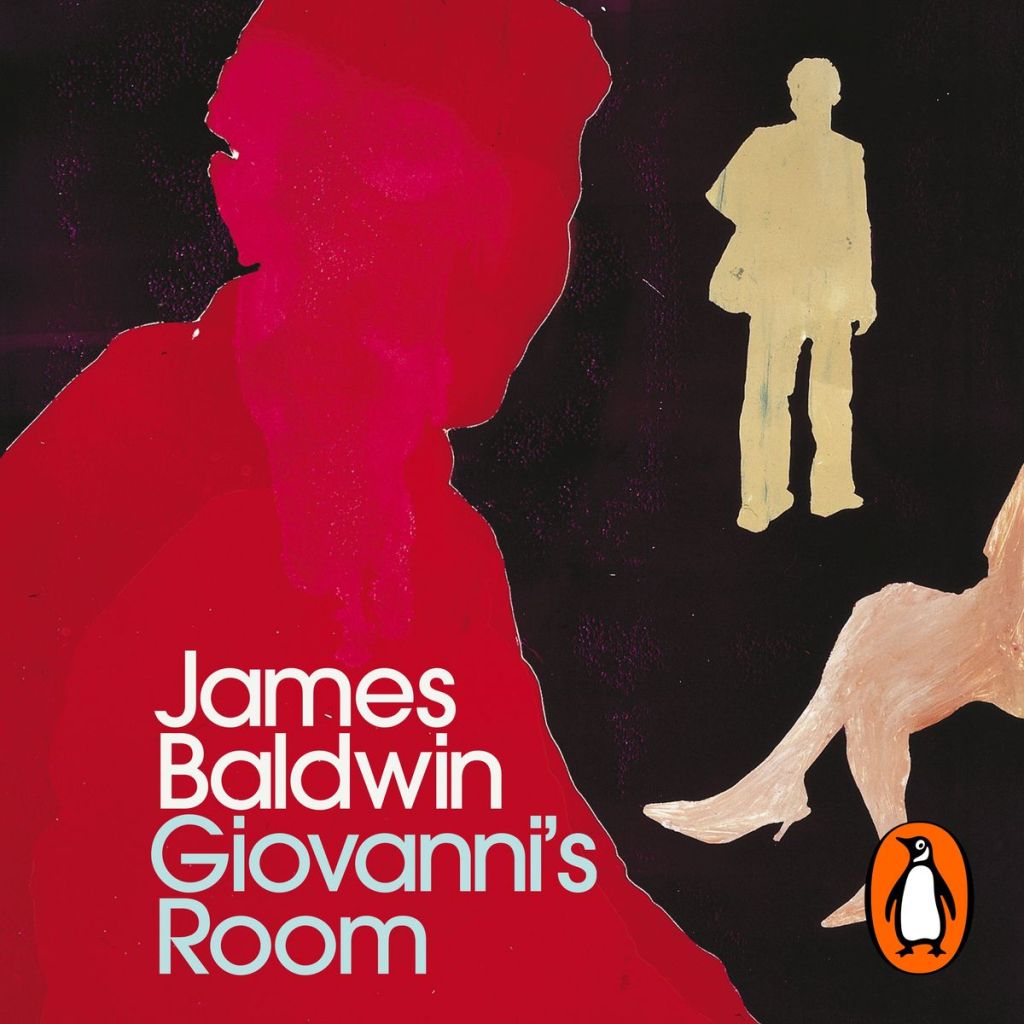
After the tragic death of his mother and a somewhat chaotic adolescence, David leaves the United States to settle in Paris, where he meets Hella, a young American woman he decides to get engaged to. When she leaves for a few months in Spain, David finds himself alone, penniless, supported by wealthy men who introduce him to Paris’s underground queer scene. It’s there, in a bar, that he meets Giovanni, an Italian bartender with whom he develops a passionate relationship. This love affair, both tender and tragic, unfolds in Giovanni’s room and across 1950s Paris, while they await Hella’s return — a return that signals David’s departure from the city.
A major voice in the fight for African American civil rights, James Baldwin chooses here to tell a love story between two white men: David, a quintessential WASP American from a bourgeois background, and Giovanni, an Italian immigrant from a working-class, peasant upbringing. Having read Baldwin in English, in his original language, I can only recommend doing the same — if only to grasp the beauty of his prose and the atmosphere he evokes in this now-iconic novel of queer literature.
The novel opens with David’s childhood and a brief look at his teenage years, marked by the loss of his mother and a father who is both immature and alcoholic. Incapable of processing grief or offering any model of manhood, this father attempts to be David’s “best friend,” denying their shared pain and ignoring his son’s growing questions about identity and belonging in a puritanical, hypocritical, and closed American society. I strongly urge readers to push through the novel’s first part, which I found especially claustrophobic and anxiety-inducing. Through a language that is both simple and deeply embodied, Baldwin makes us feel the suffocating weight of young David’s experience.
It is only in adulthood, after his decision to move to Paris, that the novel opens up — aesthetically and socially. This is where reading Baldwin in English becomes essential. If the beginning reads well in translation, the Paris sections are simply magnificent in the author’s own voice. For someone like me, who long thought — like many — that Paris belonged stylistically to French writers, it was a revelation. In Baldwin’s language, emotions swirl, the city breathes, and the narrative pulses with a vibrant rhythm shaped by the characters.
David drifts, almost effortlessly, into the Parisian gay underground. Through encounters with older men who give him money in exchange for companionship, we descend into hidden queer bars — still illegal at the time — where Baldwin reveals an alternative culture, a subterranean world at the margins of normative society, both then and now. It is here that David meets Giovanni.
Giovanni embodies nonconformity. An immigrant, constantly battered by life, he stands in stark contrast to David. Where David is the average Western man — manipulative, hypocritical, bourgeois, obsessed with appearances — Giovanni is the novel’s only truly sincere character. Honest in mourning his past life, honest in his awareness of his own despair, and above all, honest in his relationship with David. Ultimately, he becomes the true victim of a world that is brutal, macho, and homophobic — a world where survival requires submission to structures of exclusion.
Baldwin’s brilliance also shines through in his dialogue. He masterfully conveys the double meanings in words, the underlying tensions. I’m thinking especially of the first encounter between David and Giovanni — one of the novel’s most memorable scenes. The long exchange, punctuated by Giovanni’s entrances and exits, breaks the conversation into theatrical acts, drawing us into the bar’s atmosphere. Slowly, Giovanni gains the upper hand. I found this construction profoundly powerful — the pacing, the shifts, the elegance. This is Baldwin’s literary marginality in full force: through Giovanni — less educated, poorer — flashes of truth emerge that seem to silence the narrator.
Another powerful thread Baldwin weaves is the double exclusion of the queer world. External exclusion, as these characters must live in secrecy, constantly threatened by homophobic violence. But also internal exclusion — figures like Guillaume inflict psychological cruelty on Giovanni, reproducing heterosexual violence within what should be a safe queer space. The characters’ constant drinking, an attempt to cope with who they are — and ultimately to avoid fully accepting it — speaks volumes.
And so Giovanni “leaves this world,” emerging as the only character who truly escapes — paradoxically, perhaps, through death. What remains is David, and what Winnicott would call his “false self”: David and his forbidden sexuality, who, despite having opportunities to choose otherwise, clings to a system where no one can fully exist, where social norms crush individuality and forbid love.
One could also reflect on Hella — one of the few female characters, along with David’s stepmother. Hella, in her own words, seeks a “future mother” role, “submissive” to men and entirely passive. Yet she offers sharp, ironic insight — noting, for instance, that her trip to Spain only exposed her to more men trying to take advantage of her, just in another language. The novel’s final revelation provides her with a kind of truth — brutal, yes — but perhaps one that will allow her to make a different choice in the future, to stop being an object shaped by masculine law.
In the end, James Baldwin — always a fighter for civil rights — offers here a profound parallel between the condition of African Americans and that of homosexuals (and, by extension, all oppressed minorities): both condemned to segregation. The former trapped in brick ghettos, drowning in systemic racism; the latter confined to what Santiago Amigorena calls the “inner ghetto” — a barren mental space where, despite fleeting emotions or moments of grace, society determines who belongs and who is cast out. And where, inevitably, the same causes lead to the same violence.
James Badlwin, Giovanni’s Room, Penguins collection Modern Classics, 176p
A fine
 A fine